“We're at a very strange time, where boomers on Facebook are engaging with AI slop and Gen Z can complete most of their schoolwork with ChatGPT.”
Now in its third year, the FluxusMuseum Prize for Experimental Video gathers eleven artists and collectives from a field of over 600 international applications, works chosen for their resistance to easy categorisation, their originality, visual rigour, and an uncompromising approach to the form. Installed across the old marble factory by Parikia’s yacht harbour, the exhibition runs until the end of September, with prize winners announced in mid-September. Ahead of the announcement, we catch up with each of the eleven shortlisted artists and collectives.
Among this year's shortlisted artists is Bailey Keogh, whose video and sculpture practice turns a sympathetic eye on the online spiritual wellness communities caught up in misinformation, disinformation and, sometimes, financial ruin.
Could you describe your work featuring in the Prize, and how it sits in relation to your practice more broadly?
BK: Techno Holistic Medicine is characterised by constant innovation, the digitisation of information and communication, and the growing importance of digital networks and platforms within the space of spiritual and holistic health. In a broad sense, my practice is centred on misinformation, disinformation and media literacy. While working on the piece I thought deeply about the people who become caught up in online spiritual wellness communities, sometimes leading as far as bankruptcy, spiritual psychosis, or both. It's my hope that the piece can garner sympathy rather than shame or comedy, although admittedly these online health grifters and practitioners sometimes have a sort of accidental humour about them.
What is your relationship to the moving image as a medium; when did it enter your practice, and what does it let you do that other mediums don't?
BK: During the pandemic, I found myself trapped within the confines of making art from a computer. I was mostly painting at the time, but I lost access to a proper studio space, and my roommates weren't really into the whole house smelling like turpentine. I taught myself how to use programs like Blender, Cinema 4D and Unreal Engine. I found myself adding found footage to many of these works, and slowly, through making videos, there were no longer any digital animations at all. Video as a medium has a lot of freedom. When working with found footage I feel more like a curator or collector than anything else.
Are there artists, filmmakers, or traditions outside of art you feel in dialogue with here?
BK: I think anyone promoting media literacy. We're at a very strange time, where boomers on Facebook are engaging with AI slop and Gen Z can complete most of their schoolwork with ChatGPT. We're past the point where bots outnumber humans online, it's all really a mess. I recently attended a screening with Jon Rafman, and after showing a new piece he explained how it was AI, and I was taken aback that I hadn't clocked it myself. I guess it's not so much a community or tradition I find myself in dialogue with, just watching where the internet goes.
Some people use "experimental" to mean formally unconventional, others to mean something closer to research or inquiry. Which is closer to how you're using video here?
BK: Often my work starts with a research question, and it just so happens that everything that comes after falls under the umbrella of experimental film.
What would you like visitors to experience when spending time with your work?
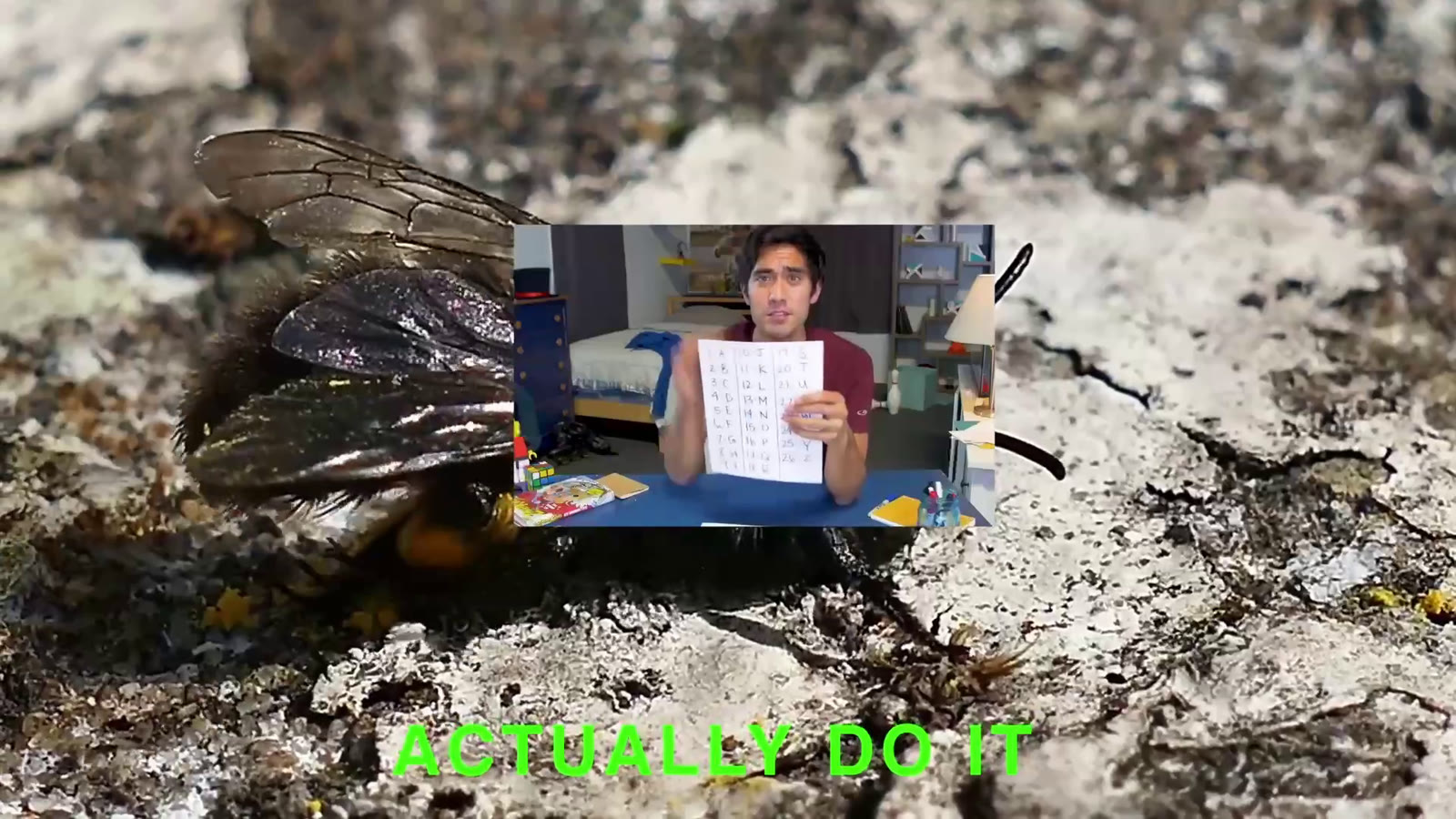
BK: If you follow the set of instructions laid out in the video, you find yourself in an old-school mentalist trick, one that's widely known but can still become enchanting to fall for. I positioned this magic trick within the video to show that when questions are asked in specific ways, they lead people to the same answer, regardless of whether that answer is correct. It makes people feel seen or understood, but in reality they were guided. Underneath the layers of audio is a hum of bees I recorded in the backyard of an apartment building near my studio, where an old woman was keeping hives. Some people in the video describe the healing frequency of bees. I find it funny to now have this healing sound mediated through layers of abstraction and technology, so anyone listening to the audio can, at the very least, enjoy the idea of a healing frequency.
What has the support from FluxusMuseum made possible, for this piece specifically or for your practice more broadly?
BK: I'm really flattered to have received this prize from FluxusMuseum. Having my work shown to a wider audience, especially one that might not usually come across it in a different context, is a very rewarding experience. The support from FluxusMuseum will be very helpful in realising my next project.
What else are you working on at the moment?
BK: Presently I'm working on a piece that tracks the overlaps in ideology between those who believe in the Rapture and those who believe in accelerationist theory. I don't believe in or support either, but I find it fascinating how both focus on a utopian future while abandoning the idea of making the present better.

Bailey Keogh (USA) is a Berlin-based artist and DJ working across hybrid media including video, installation, metal etchings, and performance.